SECURING BORDERS- DRIVE
A Salute to Martyrs.
 (part-III)
Jaisalmer.
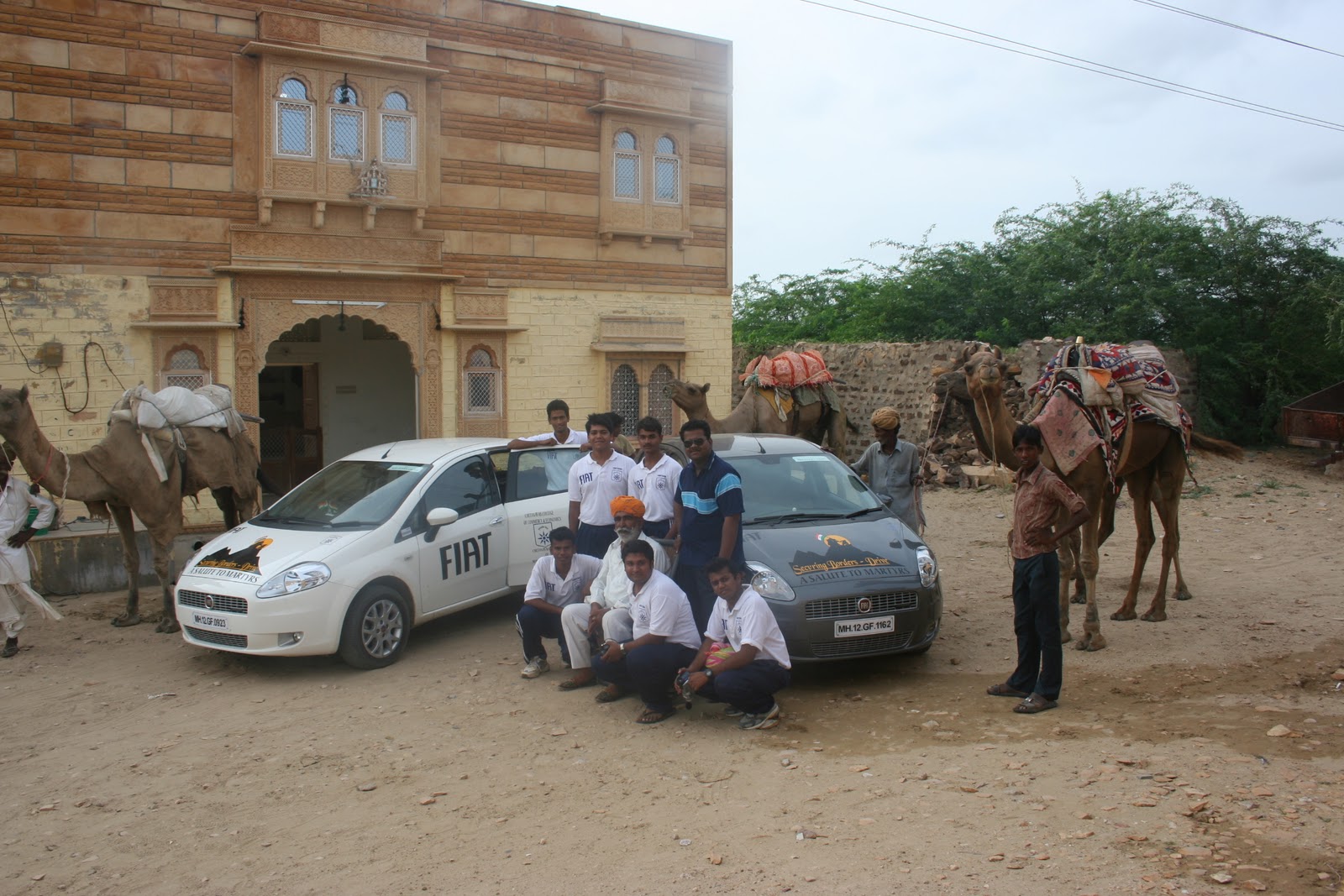
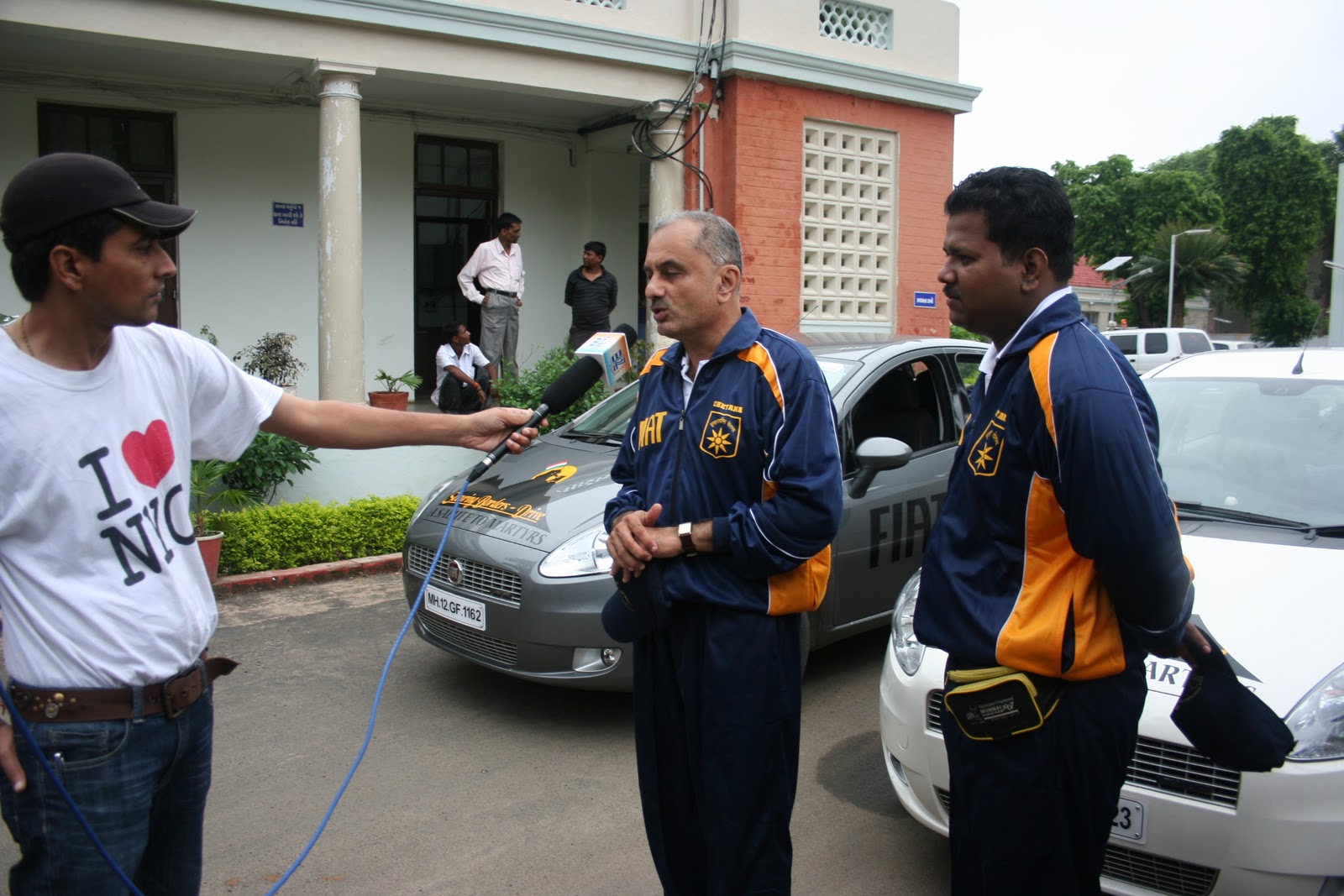
The team reached Jaisalmer from Radhanpur via Barmer on the sixth day. The team crossed over to the state of Rajasthan, before lunch and had lunch at Barmer. Rows of camel carts and camel caravans confirmed the fact that we were in Rajasthan. The roads went through some very beautiful terrain. The expedition was received at the secretariat by the Collector of Jaisalmer Mr Meena and the Additional  District Magistrate. The Collector also granted the necessary permissions to the team for visiting the border posts in the Jaisalmer sector on the next day. The team camped at the Saink Aramgarh during the stay at Jaisalme, where the students got a unique opportunity to interact with serving jawans and ex-servicemen.
On the seventh day the Collector Mr Meena and Tehsildar of Jaisalmer Mr Shaithansingh Rajpurohit. flagged off the expedition to Tanot & Longewala. The event was enthusiastically covered by the local press. The drive across the desert towards Tanot was exhilarating. The sand dunes adjoining the road at times were taller than multi-storey buildings.  In some places the roads were covered with sand and in some places the road had caved in due to shifting of the sand beneath. In spite of this the roads were in very good condition most of the time. The team offered prayers at the Ghantiyali Mata temple before reaching the Tanot Mata temple.
Tanot
 Tanot was one of the most significant places covered in the course of the expedition. Legend has it, that in the Indo-pak war of 1965, the Pakistani army had invaded and seized control of the Indian territory around Tanot. A very small group of BSF jawans, whose post was overrun by the invading Pakistan army had taken refuge in the temple of Tanot Mata. It is to this day considered a miracle that though
 the Pakistani troops had conducted a thorough search of the temple premises, they did not find a single Indian jawan there. Not only that, each one of the artillery shells fired by the invaders that landed in the temple premises, failed to explode. It is believed to this day that it was Tanot Mata who stopped the Pakistani army in its
  tracks and enabled the Indian soldiers to regain control of the territory, captured by the enemy. A slightly distorted version of this legend is presented in the movie ’Border’. Whether this was a miracle by the deity of a case of coincidence may be debated, but the jawans of the BSF posted at
  Tanot surely believe it to a miracle of the deity. Tanot Mata is considered to be the guardian of all the sons of the motherland who are posted in this sector. Every jawan and officer, who joins for duty in this sector, irrespective of whichever religion he belongs to, first pays respects at this holy shrine. Even the management of the temple is done by the BSF and its jawans. After offering prayers at the Tanot Mata temple, the team proceeded to the designated BOP to be visited.
The day was significant as it was the birthday of the expedition leader Lt Cdr (Dr) P. G. Deosthalee and the whole team and the jawans celebrated his birthday right on the border. Surely a birthday party that, the expedition leader would never forget. The team also saw the Pakistan Ranger Posts across the border. The interaction was eye opening in more ways than one. The temperature even during the monsoons was about 45 degree Celsius and to even imagine what it would be like in the summer was terrifying. In spite of all this, our brave soldiers
stand guard at the cost limb and life so that we live in peace.
Longewala and Maujewala
 From Tanot the team reached the Longewala post the site of the historic battle between Pakistani armour and the Indian Air Force and Army. The movie ‘Border’ has made Longewala a household name. The team paid respects to the valiant soldiers who fought there on that historic day.
  They visited the martyr’s memorial and also climbed on the war trophy kept on display there. They also interacted with the jawans and officers stationed there. The team was touched by the hospitality extended out to them by the jawans even in those harsh conditions. The officers and jawans appreciated the effort
  of the team in organizing an expedition of this type. They were so pleased during the interaction with the team that they gave us special permission to visit the actual BOP at Maujewala, that was at a distance about 30 km over extremely difficult and unstable terrain. Since it was unrealistic to expect the
  expedition cars to negotiate such extreme terrain, the army unit helped us by providing us with a 2 ½ tonner 4x4 vehicle to reach Maujewala BOP. The 45 minute drive in the army 4x4 was a ride of a lifetime. The team experienced the thrill of a desert safari, courtesy the Indian Army.

 At Maujewala, the students were once again shown the border and also the Pakistani positions. The officer in-charge also briefed the team about their activities and the challenges faced by them. The team returned to Jaisalmer after sunset. The drive through the desert at dusk was exciting. The eight day was spent on interacting with locals both in and around Jaisalmer. The team visited the shifting sand dunes at Khudi village where they interacted with locals and also the Sarpanch. The team met an Italian couple at Khudi, who were really impressed upon seeing the fiat cars as part of such a unique expedition. The team experienced the thrill of riding camels on the desert and had fun on the sands before driving to camp for the night.
Air Force Station-Jaisalmer

On the nineth day the expedition reached Air Force Station-Jaisalmer. It was this place from where the aircraft in the battle of Longewala were launched. Since this base played a momentous role in the battle of Longewala it was a place the expedition could not afford to miss. The team  was received by the Station Commander, Group Captain Rajiv Ranjan VSM. The team was given an awe-inspiring tour of the base. The students were
  first taken to the surface to air missile battery and briefed about the working of the SAMs. Later they were also taken to see the latest entrants in the world of aviation, the UAVs, which they got to see and touch first hand. The station commander had even offered to let the team to see the Mirage-2000 aircraft, which were to arrive on the base in the afternoon. The Mirage-2000,which is also called the Vajra is one of the most advanced multi-role combat
  aircraft in the Indian
  Air Force. This French manufactured aircraft proved its mettle during the Kargil war by laser-bombing the Pakistani positions. The whole team was exhilarated at the prospect of seeing, touching and perhaps even getting an opportunity to sit in the cockpit of the Vajra. The jubilation was short-lived though because, the arrival of the Mirage-2000s had been delayed and we had to start for Jodhpur before dusk. Lunch was served to the team at the base, in the officers’ mess. The team gave test rides of the punto to officers on the base, before being flagged off towards Jodhpur. The team flagged off from the base by the Commanding Officer, Group Captain Rajeev Ranjan towards Jodhpur.
 ______________________________________________________________________
Article by
Prof Shivaprasad. M,
Expedition Coordinator,
‘Securing Borders Drive’.
This article is the copyright of the author and cannot be reproduced for any commercial purposes without permission.
 (part-IV)
 The expedition reached Jodhpur in the evening of the nineth day. Four new team members joined the expedition on the tenth day. The cars were thoroughly checked & serviced at the FIAT service center where Mr. Sethi, the Marketing manager gave a pep-talk to the team. From Jodhpur, the team started for Ferozpur in Punjab. The Rajasthan Leg of the expedition had received prominent news coverage, in newspapers like Rajasthan Patrika, Dainik Bhaskar etc. After leaving Jodhpur, the team crossed Bikaner and camped at Suratgarh, on the way.
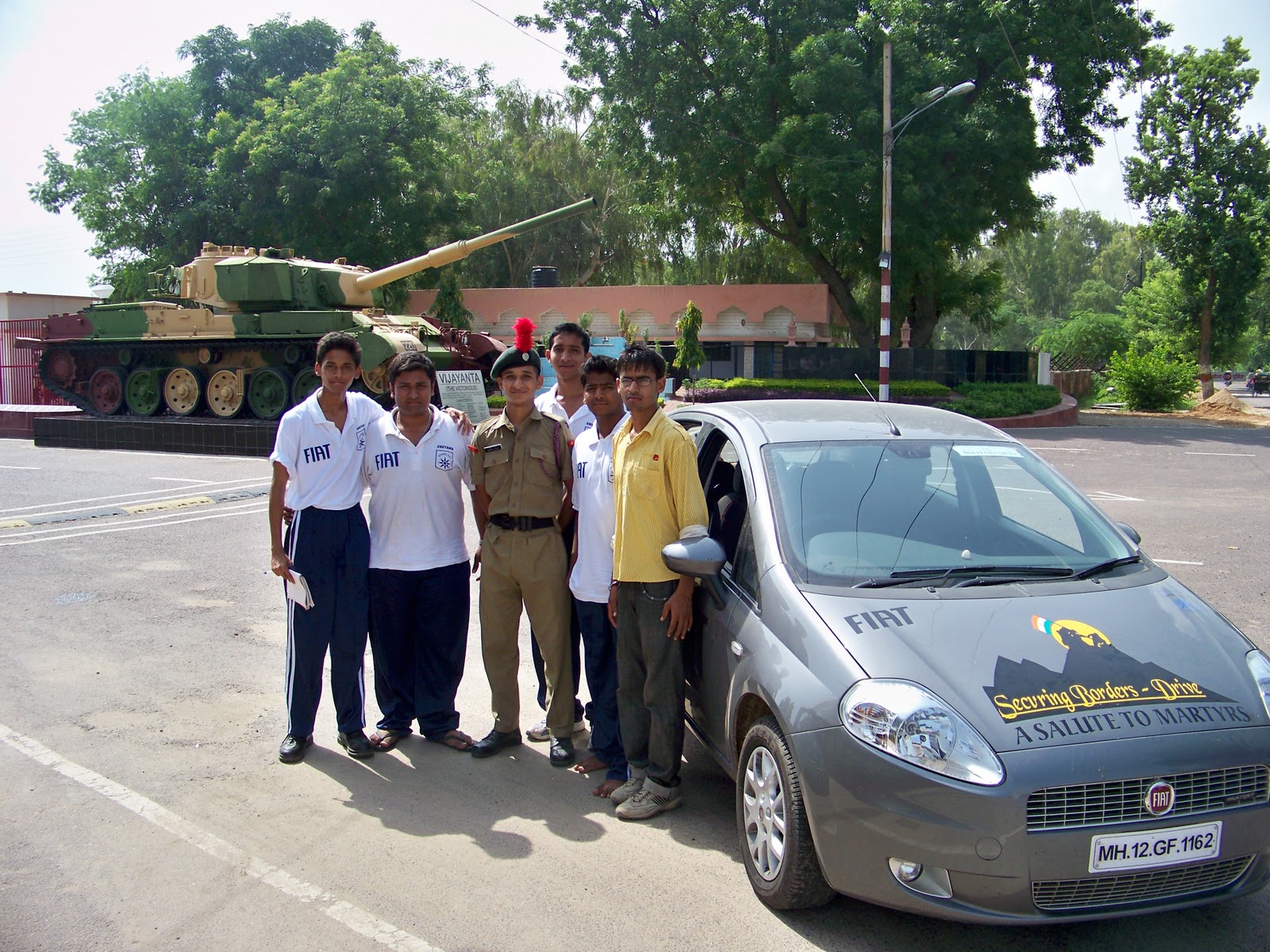 The team reached Ferozepur from Suratgarh on the eleventh day. Enroute the team got a unique opportunity to interact with NCC Cadets, who were attending their ATC near Srigananagar. Once in Punjab, the land of the five rivers, the team saw endless lines of tractors and the indigenous juggads. The weather being pleasant, the drive was enjoyable. The drive was through much greener terrain once we reached Punjab. The team arrived at
  Ferozepur at noon. The team first visited the war memorial at Ferozepur, to pay respects to the martyrs who had laid down their lives in defence of the motherland.The local media there gave good coverage to the visit of the team. The team’s visit was
  given coverage in many newspapers like Punjab Kesri, Dainik Jagran etc. In the evening the team visited the Hussainiwala Border post. Though not as well known as its northern counterpart, Wagha, this post nonetheless is an important post to witness the ‘Beating Retreat’ ceremony. The team members were allowed to witness the entire parade from
  the VIP enclosure. The parade by the Border Security Force jawans and their counter parts from the Pakistani Rangers was spectacular. The synchronization and posturing at this ceremony has become legendary not just in India but also across the world, with many foreign tourists thronging to witness this spectacle. The team later interacted with the jawans and officers of the Border Security Force.